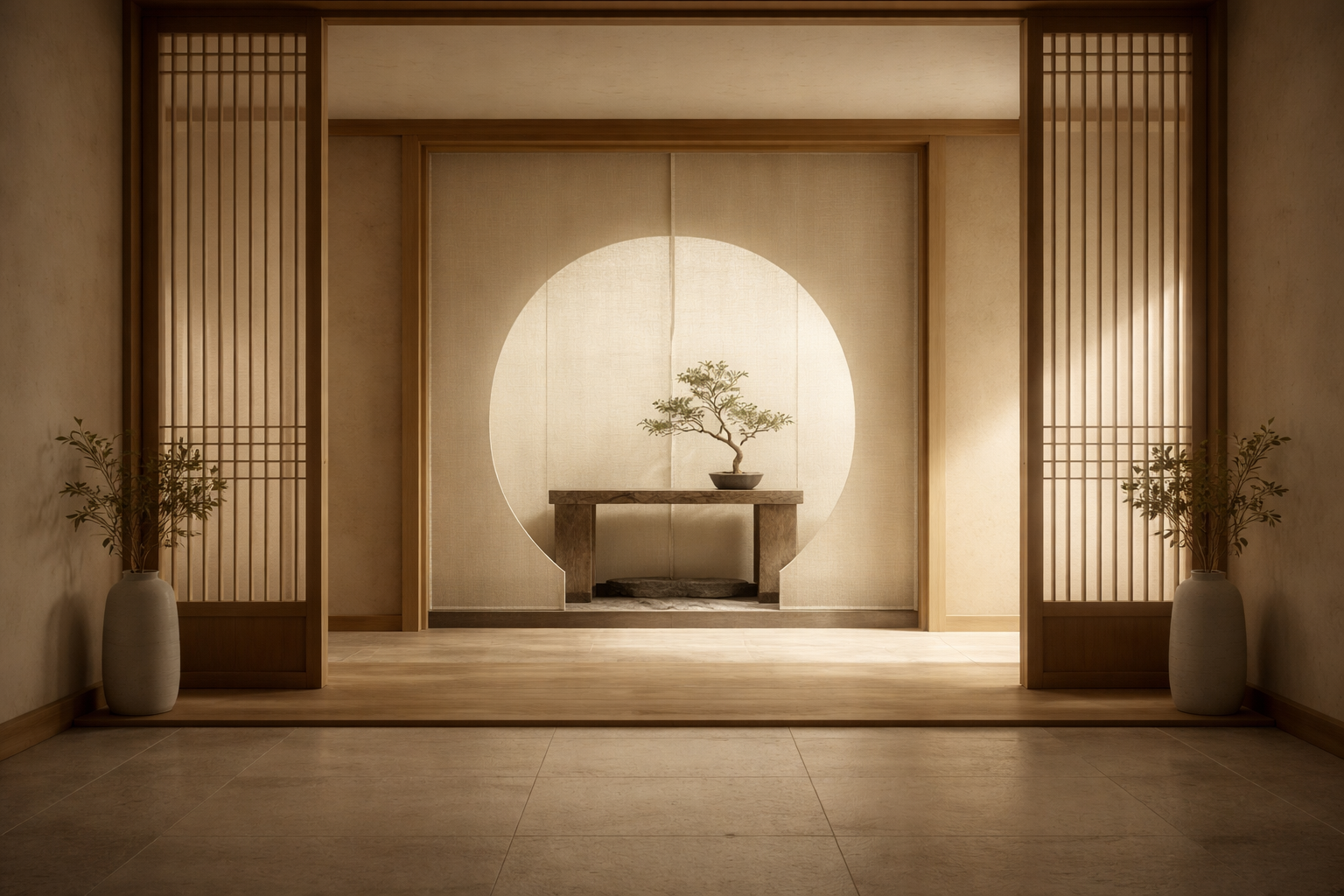
Many people tell me the same thing:
“Nothing is particularly wrong with my home… but I don’t feel rested when I’m inside it.”
They clean more. Declutter more. Add plants, scents, and soft lighting. And yet, something still feels off.
Very often, the issue has nothing to do with the bedroom, the sofa, or the kitchen.
It starts at the 玄关 (Xuan Guan).
What Is 玄关 in Feng Shui?
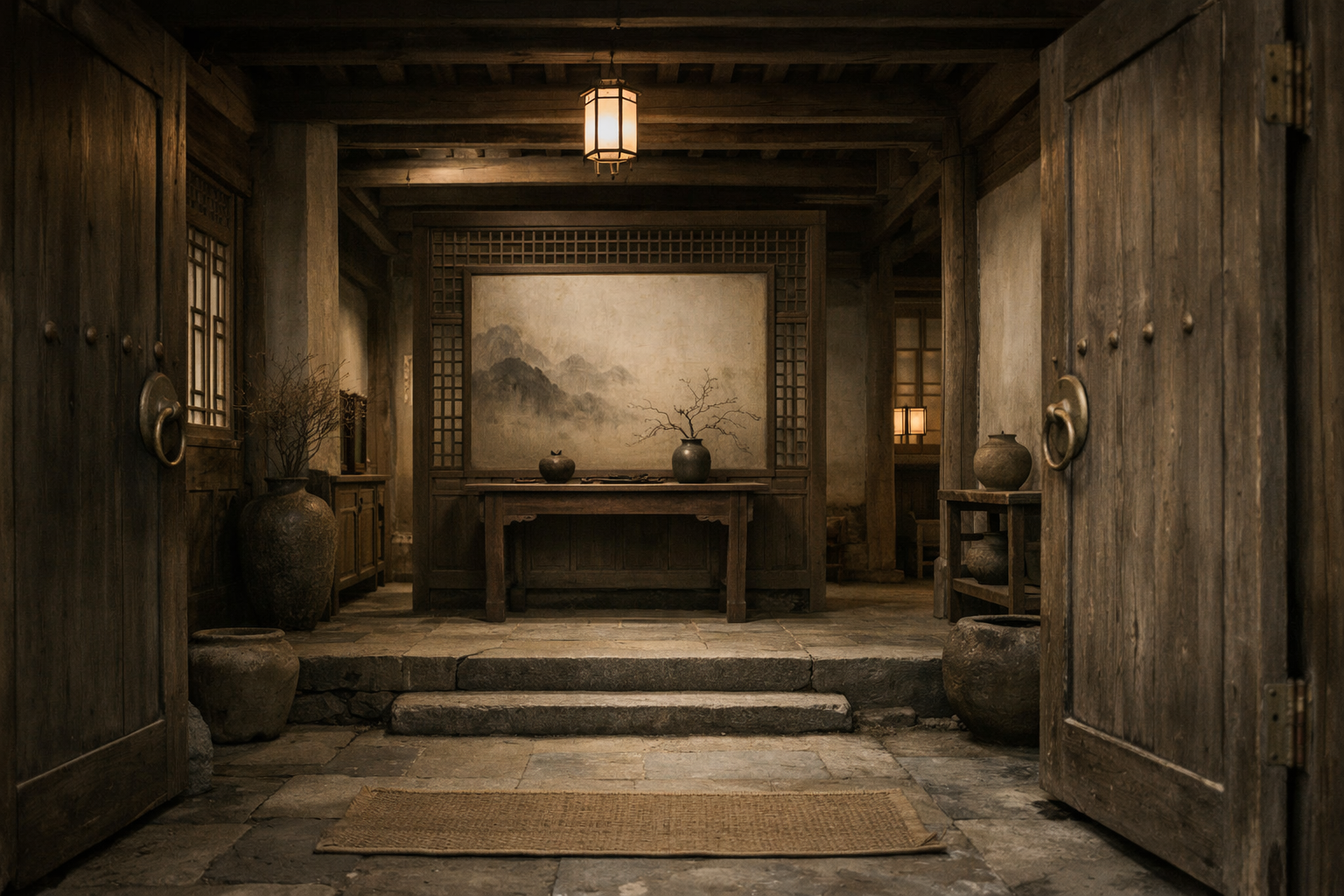
In classical Feng Shui, the front door does not open straight into the heart of the home.
Between the outside world and the inner living space lies the 玄关 — a transitional zone just inside the entrance.
玄关 can be understood as a subtle pass, but its function is very practical: it is where the outside world is meant to stop.
The 玄关 exists to:
- slow incoming Qi
- buffer external noise and emotional residue
- allow the body and mind to shift states
It is not a place for living. It is a space for arrival.
Why Traditional Homes Always Had a 玄关
In older Chinese homes, the 玄关 was never an afterthought. It might take the form of a short corridor, a screen wall, a partial enclosure, or even a small courtyard before entering the main hall.
These were not decorative features. They existed to prevent energy from rushing straight into the home — and to prevent private life from spilling directly outward.
The design created a pause:
- Qi settles
- attention slows
- identity shifts from “public self” to “private self”
This pause is far more important than most people realise.
What Happens When a Home Has No 玄关
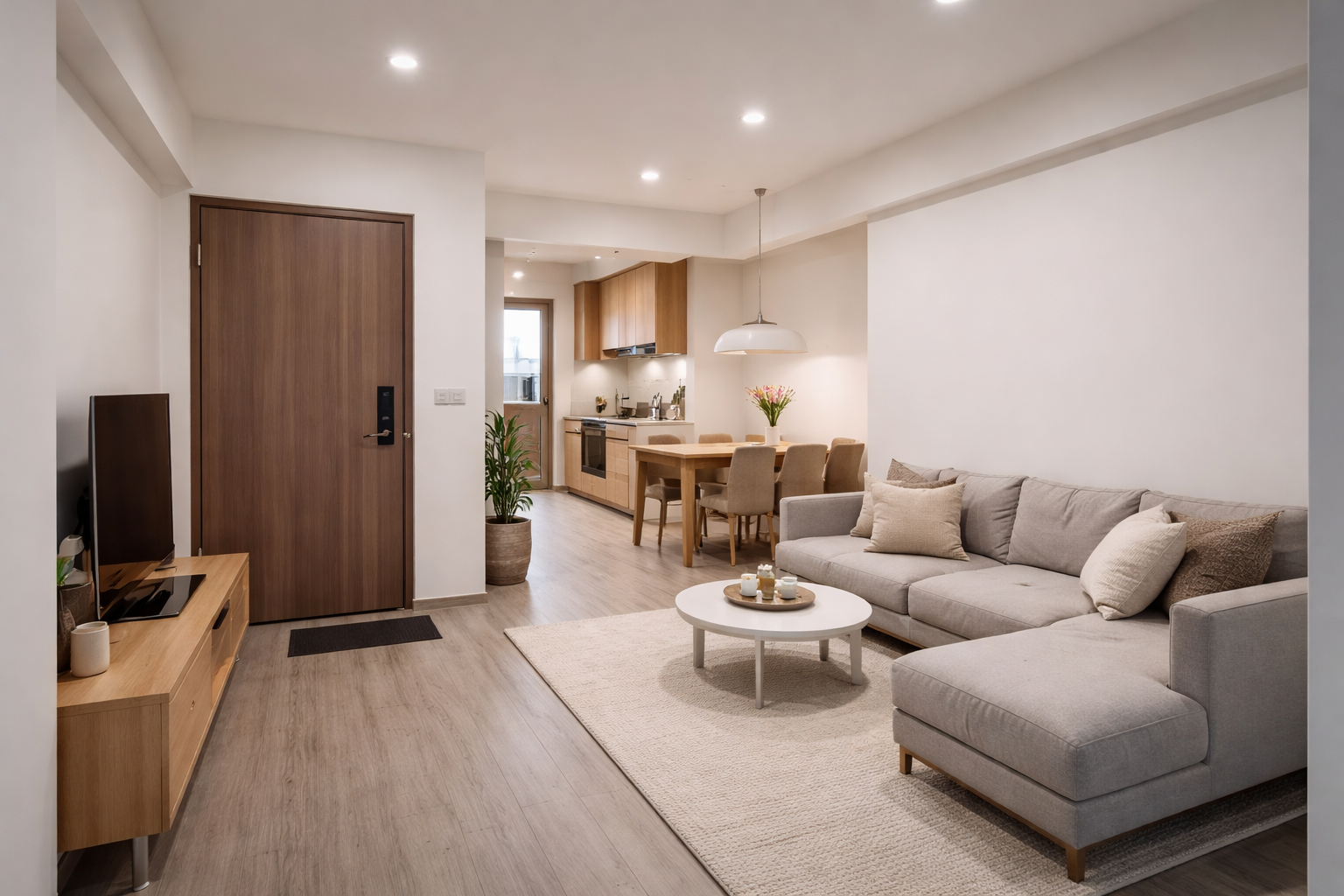
In many modern apartments, the front door opens directly into the living room, dining area, or even a work desk.
From a Feng Shui perspective, this creates no buffer. From a human perspective, it creates no decompression.
There is no space for:
- work stress to dissolve
- emotional carryover to drop
- the nervous system to downshift
Over time, people living in such homes often experience:
- difficulty resting even when physically tired
- irritability without a clear cause
- a sense that home never fully feels “closed”
This is not a personality flaw. It is a transition problem.
玄关 Is About Regulation, Not Decoration
Many people misunderstand 玄关 Feng Shui as being about shoe cabinets, mirrors, decorative objects, or feature walls.
These are tools, not the purpose.
The true role of the 玄关 is regulation. It regulates pace of movement, emotional carryover, and how Qi distributes into the home.
A supportive 玄关 quietly tells the body:
“You are no longer outside. You can slow down now.”
Why Modern Homes Feel Draining Even When They Look “Nice”
This is one of the most confusing experiences for homeowners: the home looks fine, the layout is modern, the furniture is tasteful — but rest doesn’t happen.
When a home lacks a proper entry transition, the issue is not aesthetics — it is continuity of tension.
Whatever state you were in outside — urgency, defensiveness, mental noise — flows straight in with you. The home never gets the chance to reset you.
How to Create a 玄关 Without Renovation
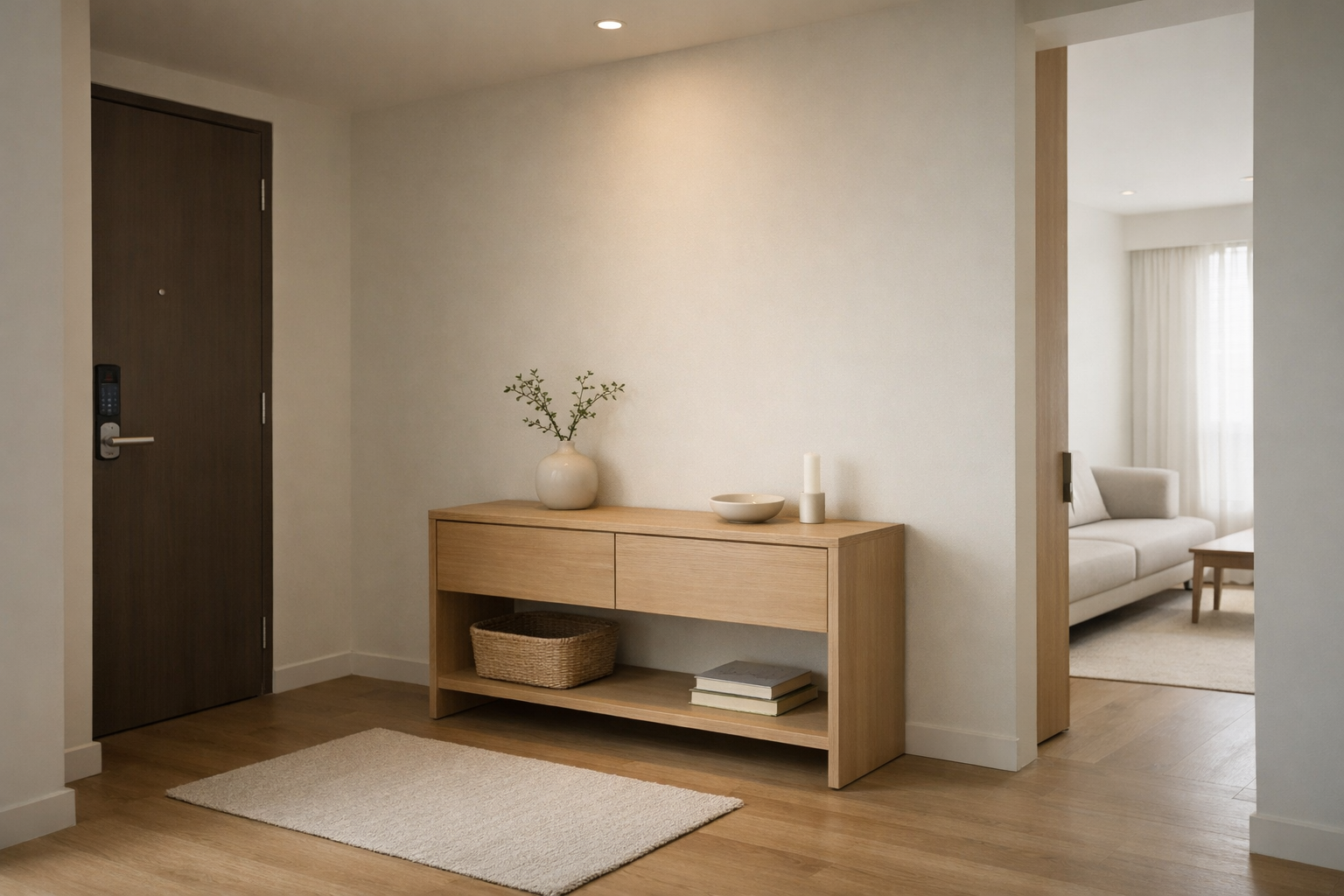
A functional 玄关 does not require construction. It requires three things:
- A sense of pause
- Visual softening
- Directional clarity
This can be achieved through simple, practical choices:
- a short visual barrier or “anchor” near the entrance
- a console table or low cabinet that slows movement naturally
- soft lighting that calms rather than stimulates
- intentional empty space (not more décor)
The goal is not to block Qi. The goal is to allow Qi to arrive properly.
How 玄关 Relates to the Front Door
The front door and the 玄关 form one system.
The front door determines what enters. The 玄关 determines how it enters.
This is why focusing only on direction, colours, or symbolic objects often produces limited results. Without a proper transition, even “good” Feng Shui inputs can feel overwhelming.
If you want the deeper foundation behind this, read:
Why the Front Door Matters in Feng Shui →
Final Thoughts
Life is made up of transitions.
When transitions are rushed, collapsed, or ignored, friction accumulates — emotionally, mentally, and energetically.
The 玄关 exists to protect that moment of crossing.
If your home feels draining despite your best efforts, the question may not be “What am I missing?” but rather:
“Where am I not being allowed to arrive?”